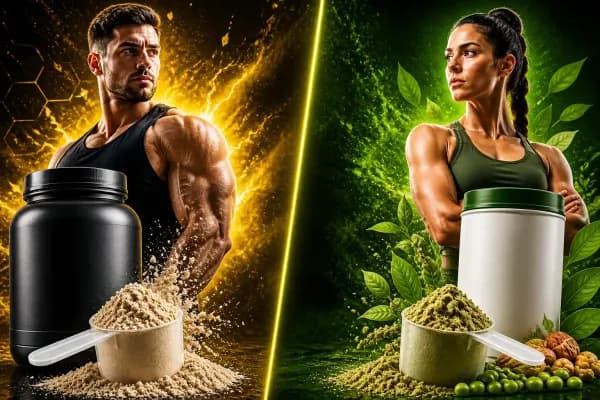
Walk into any supplement store and you'll be hit with an overwhelming wall of protein tubs. Whey dominates the shelves, but plant-based proteins are growing fast - and for good reason. Whether you're a gym-goer, a vegan athlete, or just someone trying to hit their daily protein goals, this guide cuts through the marketing noise.
This is not a vs. debate with a lazy winner. It's a complete, keyword-optimised breakdown of both protein types so you can make the right call for your body and lifestyle.
What is Whey Protein?
Whey protein is derived from cow's milk during the cheese-making process. When milk curdles, liquid whey is separated from the solid curds. That liquid is then filtered, processed, and dried into the powder you scoop into your shaker bottle every morning.
It comes in three forms: Whey Concentrate (70–80% protein, some lactose and fat), Whey Isolate (90%+ protein, minimal lactose), and Whey Hydrolysate (pre-digested for the fastest absorption). Each has its place depending on your tolerance and goals.
26g Protein per 30g scoop (isolate) 9 Essential amino acids (complete) #1 Most studied protein supplement
What is Plant Protein?
Plant protein powders are made from a wide variety of botanical sources — pea, rice, hemp, soy, pumpkin seed, and sunflower seed being the most popular. The protein content is extracted, concentrated, and powdered.
The key challenge with most plant proteins (except soy) is that they are incomplete — meaning they lack one or more essential amino acids. This is why most quality plant protein blends combine two or more sources (typically pea + rice) to create a complete amino acid profile.
Blending pea protein (rich in lysine, low in methionine) with brown rice protein (rich in methionine, low in lysine) produces a complete amino acid profile comparable to whey. This is the gold standard for plant-based formulations.
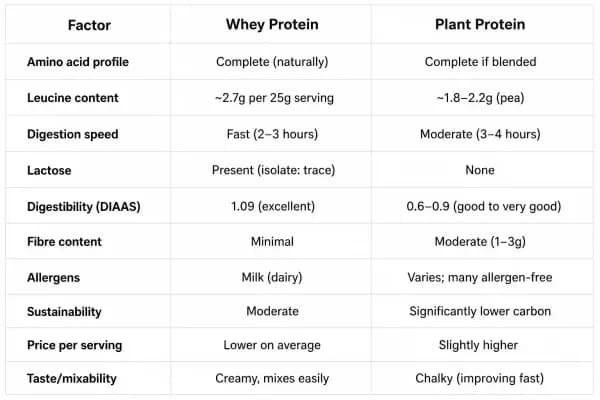
Head-to-Head: The Full Comparison
Muscle Building: Does It Actually Matter?
For years, whey was considered the uncontested king for muscle protein synthesis (MPS). This reputation is well-earned - whey has a high leucine content, and leucine is the amino acid that directly triggers the mTOR pathway responsible for initiating muscle repair and growth.
However, recent studies (including a 2023 meta-analysis published in the Journal of the International Society of Sports Nutrition) show that when plant proteins - particularly pea protein - are consumed in sufficient quantities, the difference in muscle gain between whey and plant is statistically insignificant over 8-12 weeks of resistance training.
The keyword here is sufficient quantities. Because plant proteins have slightly lower leucine per gram, you may need to consume 10–15% more total protein to hit the same leucine threshold. Practically, that means taking slightly larger or more frequent servings.
Digestion & Gut Health
For people who are lactose intolerant — which includes roughly 65% of the global adult population — whey concentrate can cause bloating, cramps, and digestive distress. Whey isolate significantly reduces this issue by removing most of the lactose, but it doesn't eliminate it entirely.
Plant proteins are inherently lactose-free. Many plant protein blends also include digestive enzymes (like bromelain and papain) and prebiotic fibre, which actively support gut microbiome health. If your gut has been giving you trouble with dairy-based proteins, a pea-rice blend is worth serious consideration.
Hemp protein is particularly notable for its digestibility - it contains albumin and edestin, two highly bioavailable protein forms, plus a natural 3:1 omega-6 to omega-3 ratio that supports inflammation management.
Environmental Impact: The Bigger Picture
If sustainability influences your buying decisions, plant proteins win this category emphatically. Dairy farming is resource-intensive - producing 1kg of whey protein generates an estimated 35kg of CO₂ equivalent. In contrast, pea protein production generates roughly 2-4kg CO₂ per kg of protein, uses significantly less water, and can even fix nitrogen into the soil, reducing the need for synthetic fertilisers.
This isn't just idealism. As climate-conscious consumers increasingly factor environmental cost into their purchasing decisions, the plant protein market has grown at a compound annual growth rate of over 8% since 2020. By 2026, it represents one of the fastest-growing segments in the global supplement industry.
Who Should Choose Whey?
Whey protein remains the optimal choice if you are lactose tolerant, prioritise speed of absorption (particularly for post-workout recovery windows), are on a budget, and want the most studied, evidence-backed option. Competitive athletes and bodybuilders who need to maximise every percentage point of muscle protein synthesis may still prefer whey isolate as their primary source.
Who Should Choose Plant Protein?
Plant protein is the better fit if you follow a vegan or vegetarian lifestyle, have lactose intolerance or dairy sensitivities, want more fibre and micronutrients in your supplement, care about environmental impact, or simply prefer a product with fewer animal-derived ingredients. A well-formulated pea-rice blend is not a compromise - it is a legitimate, high-performance option.
Both protein types can build muscle, support recovery, and help you hit your daily protein targets. Whey has a marginal edge in absorption speed and leucine delivery. Plant protein has a meaningful edge in digestibility for sensitive stomachs, sustainability, and dietary inclusivity. The best protein is the one you'll actually use consistently - at the right dose, day after day.