Breathing Exercises: Simple Ways to Relax Your Mind and Body
We breathe all day without thinking about it. But when we're stressed, worried, or overwhelmed, our breathing can become faster and shallower without us even noticing.
The good news is that you don't need special equipment or a gym to work on your breathing. Spending just a few minutes focusing on slow, controlled breaths can be a simple way to pause, relax, and bring your attention back to the present moment.
Here are some easy breathing exercises you can try.
1. Deep Belly Breathing
This is one of the easiest exercises for beginners.
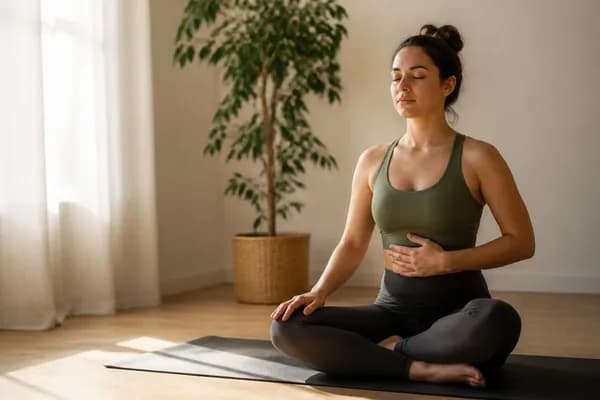
Sit or lie down comfortably and place one hand on your chest and the other on your stomach. Slowly breathe in through your nose and allow your stomach to rise. Then breathe out slowly through your mouth.
Try to keep your shoulders relaxed instead of lifting your chest with every breath.
Repeat this for 5–10 breaths, focusing on making each breath slow and comfortable.
2. Box Breathing
Box breathing is a simple technique that involves four equal steps.
- Breathe in for 4 seconds
- Hold for 4 seconds
- Breathe out for 4 seconds
- Hold for 4 seconds
Repeat the cycle several times.
It's easy to remember and can be useful when you need a short mental break during a busy day.
If holding your breath feels uncomfortable, don't force it. Simply return to normal breathing.
3. 4-7-8 Breathing
Another popular technique is 4-7-8 breathing.
Breathe in gently for 4 seconds, hold your breath for 7 seconds, and then slowly breathe out for 8 seconds.
The long exhale encourages you to slow down and focus on your breathing.
If you're new to this exercise, the timing may feel difficult at first. It's perfectly fine to use shorter, more comfortable counts.
4. Pursed-Lip Breathing
This technique is particularly simple.
Breathe in slowly through your nose for about two seconds. Then gently purse your lips as if you're blowing out a candle and breathe out slowly for around four seconds.
The important part is to make the exhale longer than the inhale.
Try it for a few minutes while sitting comfortably.
5. Alternate Nostril Breathing
Popular in yoga traditions, alternate nostril breathing involves breathing through one nostril at a time.
Sit comfortably, close one nostril, and breathe slowly through the other. Then switch sides and repeat.
The technique requires concentration, which can make it easier to take your attention away from a busy stream of thoughts.
Keep your breathing gentle rather than trying to take extremely deep breaths.
Why Breathing Exercises Can Feel So Calming
When we're stressed, our body can shift into a more alert state. Heart rate and breathing may increase, and muscles can become tense.
Slow breathing gives you something simple to focus on and may help encourage a more relaxed state.
It can also become a useful habit before activities such as meditation, stretching, bedtime, or a stressful meeting.
When Should You Try Breathing Exercises?
There isn't a single perfect time.
You could try them:
- After waking up
- Before going to bed
- During a work break
- Before an important meeting
- After a stressful situation
- Before meditation
- During a quiet moment in the afternoon
Even 2–5 minutes can be enough to create a small pause in your day.
A Simple Routine for Beginners
If you're not sure where to start, keep it simple.
Sit somewhere comfortable, relax your shoulders, and take 5 slow breaths. Pay attention to the air moving in through your nose and out again.
Don't worry about making every breath perfect. The goal isn't to breathe as deeply as possible. It's simply to slow down and become more aware of your breathing.
With practice, you may find it easier to make this a regular part of your daily routine.
Final Thoughts
Breathing exercises are simple, free, and can be done almost anywhere. They aren't a magic solution for every stressful situation, but they can provide a useful moment to slow down and reconnect with yourself.
Start with just a couple of minutes a day. Find a technique that feels comfortable and make it part of your routine.
Sometimes, taking a few slow breaths is all you need to remind yourself to pause before rushing into the next thing.
If breathing exercises make you dizzy, uncomfortable, or short of breath, stop and return to normal breathing. If you have a medical condition affecting your breathing, speak with a healthcare professional before trying structured breathing exercises.